Senior Dog Sleep Changes: What to Track
A practical way to record senior dog sleep changes, improve nighttime safety, and prepare useful questions for a veterinary appointment.
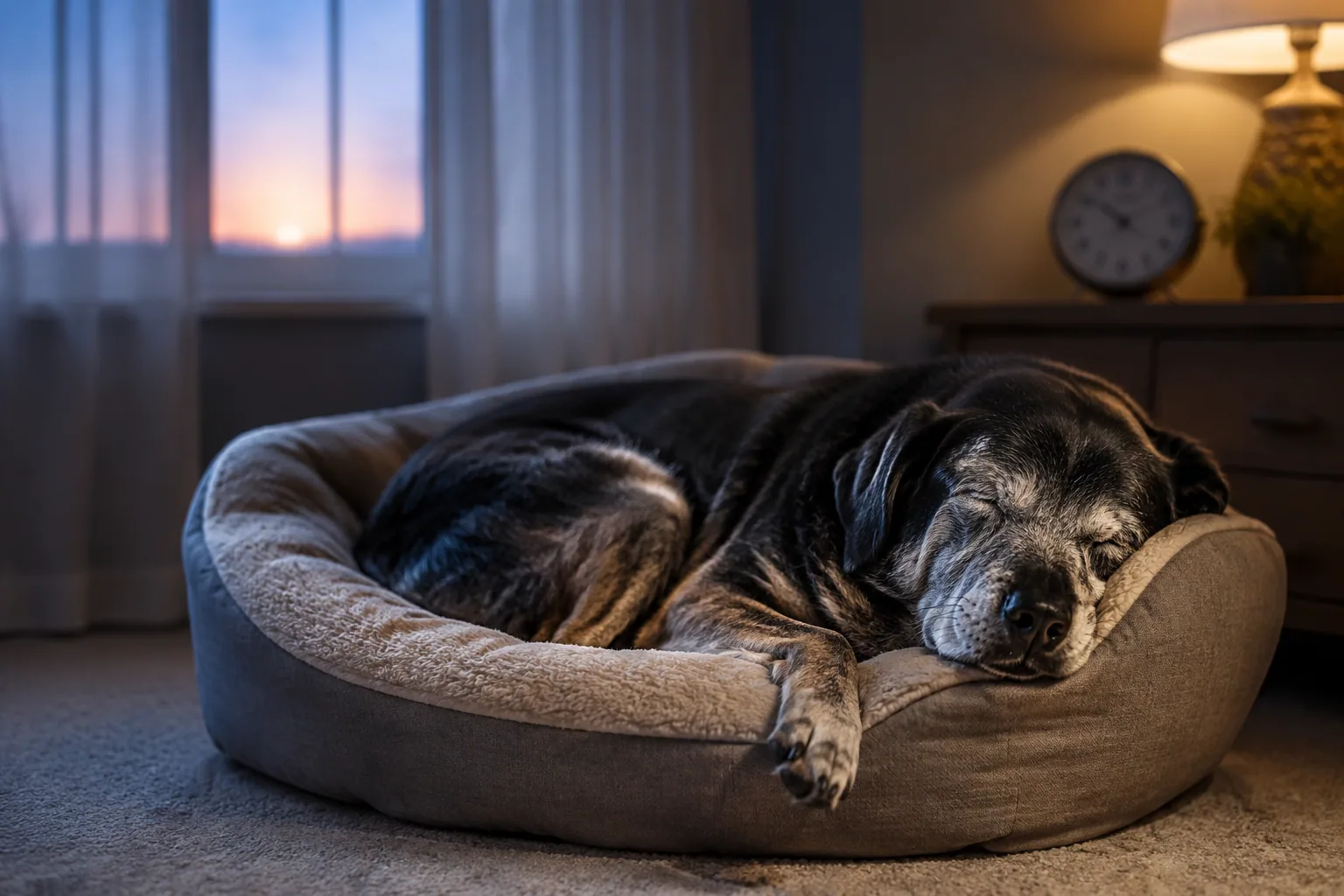
Senior dog sleep changes deserve attention when they are new, persistent, or affecting daily comfort. Sleeping more can accompany a quieter routine, while waking, pacing, or vocalizing at night can have many possible causes. A sleep log helps your veterinarian see the pattern without turning one difficult night into a diagnosis.
Record a full day, not only the bad hours
For one week, note when your dog settles, wakes, goes outside, eats, exercises, and takes medication. Estimate daytime naps and nighttime wake periods. Include what you observe during waking: pacing, panting, staring, asking to go out, coughing, scratching, or repeated attempts to get comfortable.
Context matters. A dog who sleeps after an unusually active morning presents a different pattern from a dog who becomes hard to wake or stops enjoying familiar activities.
Look for related changes
AVMA lists altered sleep-wake patterns among behavior changes that can occur with cognitive dysfunction, but it also encourages veterinary evaluation of senior-pet changes more broadly. Record mobility, appetite, drinking, elimination, hearing, vision, and social behavior. Tell the veterinarian about any new medicine, supplement, food, household schedule, or stressful event.
Do not assume a sleep problem is behavioral. Discomfort, the need to urinate, breathing problems, sensory loss, and other medical issues can affect rest.
Make the sleep area easier to use
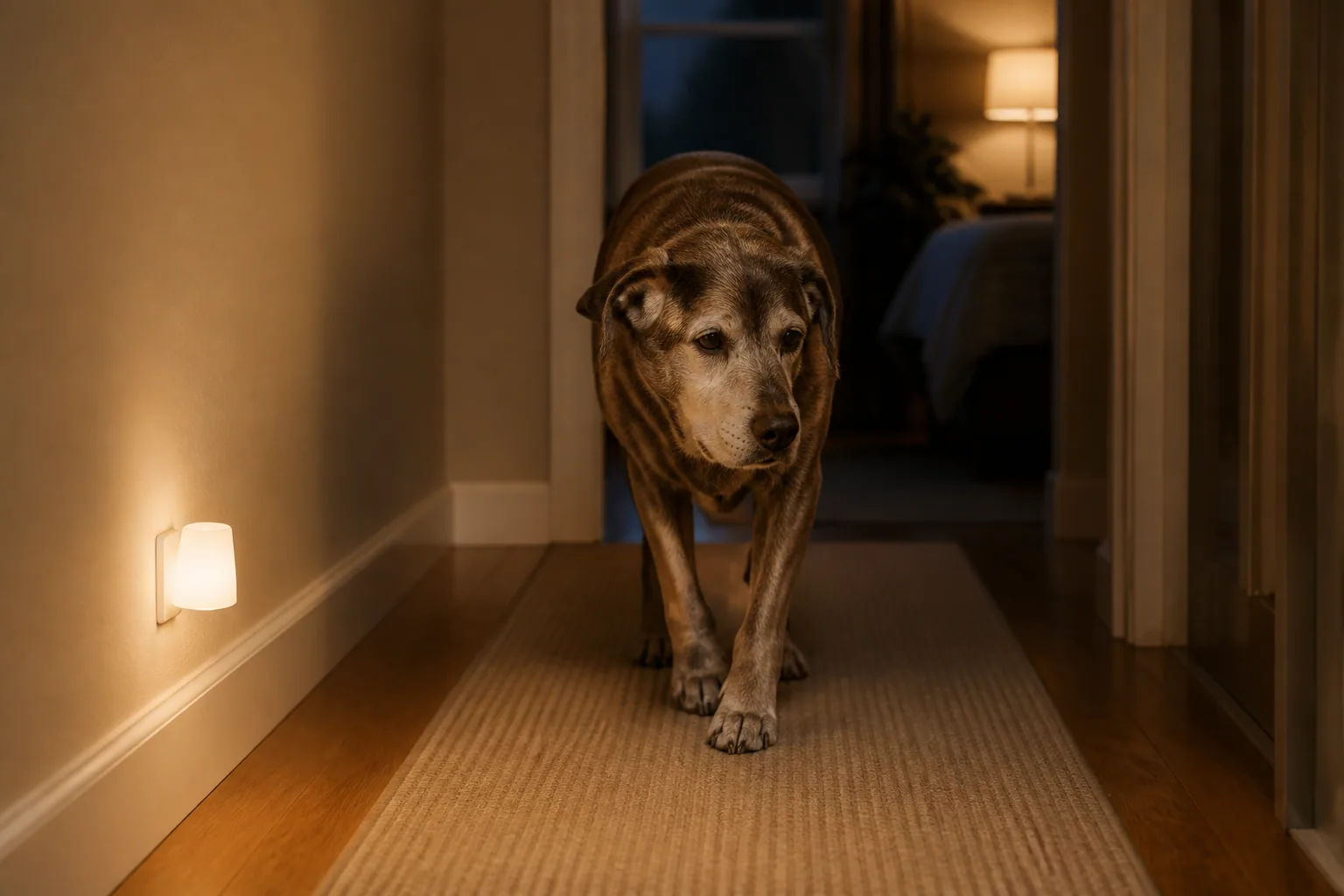
Choose a familiar, quiet place with secure footing and a clear path to water and the usual exit. Add soft, even lighting if darkness appears confusing. Keep the room at a comfortable temperature and reduce sudden noise. Check the bed for damaged seams and make sure the dog can enter and leave it without struggling.
Change one environmental detail at a time. A complete room rearrangement may create more difficulty for a dog who relies on familiar landmarks.
Keep the evening predictable
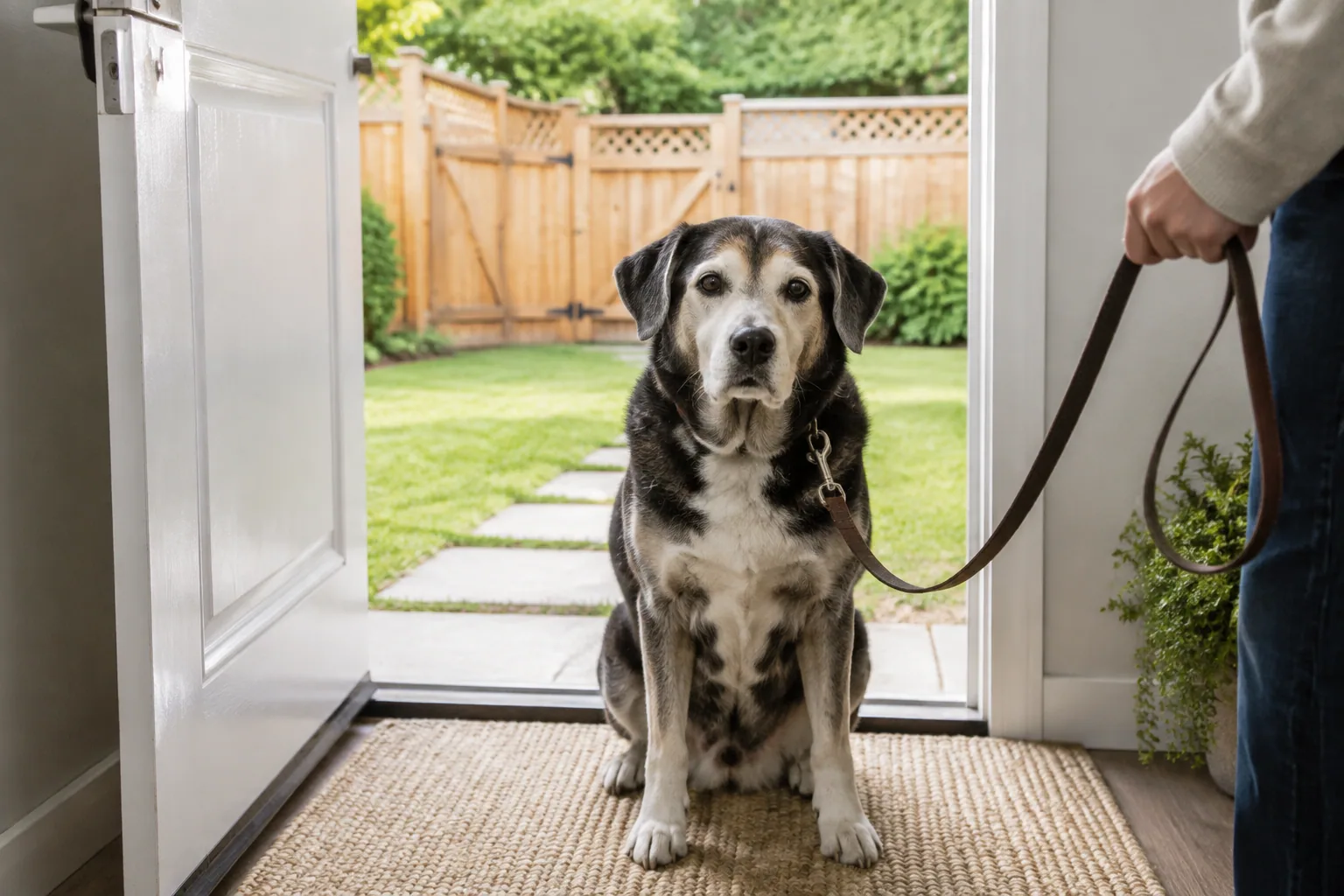
Use a calm sequence that fits the veterinary plan: an appropriate outdoor break, quiet time, and prescribed medication at the correct time. Avoid compensating for daytime sleep with exhausting late exercise. Activity should match the dog’s mobility and health.
If your dog wakes, respond calmly. Guide them to a safe area, offer the usual toilet opportunity, and note what happens. Scolding cannot correct a health or orientation problem and may add anxiety.
Recognize urgent changes
Seek prompt veterinary advice for a sudden major change in awareness, collapse, seizure, difficulty breathing, inability to stand, severe distress, repeated vomiting, or possible toxin exposure. Do not wait to complete a seven-day log when a dog appears acutely unwell.
For gradual sleep disruption, arrange an appointment before the household becomes exhausted. Cornell explains that cognitive dysfunction is considered alongside other conditions that can mimic its signs.
Use the appointment to set measures
Bring the log, short videos if safe, and a complete list of food, medicines, and supplements. Ask which causes are being considered and what each recommended test or change is intended to clarify.
Agree on two or three outcomes to track. Examples include total wake periods, time needed to resettle, accidents overnight, daytime engagement, and signs of distress. Review the plan on a defined date.
Sleep changes can be emotionally and physically demanding for caregivers. Say so. AAHA’s senior-care framework includes caregiver burden because a plan must be workable for the family providing it.
A consistent record turns “sleep is worse” into information the veterinary team can use. It also helps you judge whether practical changes are improving comfort over time.
Further reading & sources
Cornell University: Cognitive dysfunction syndrome ↗AAHA: 2023 Senior Care Guidelines for Dogs and Cats ↗AVMA: Senior pets need more attention ↗Edited by Waggle Hollow
Every dog is different. This is general information, not a diagnosis or treatment plan. Ask your veterinarian about individual health, diet, and supplement decisions.