Senior Dog Pacing at Night: A Tracking Plan
When a senior dog paces at night, a structured log and safer bedtime environment can help your veterinarian understand the pattern.
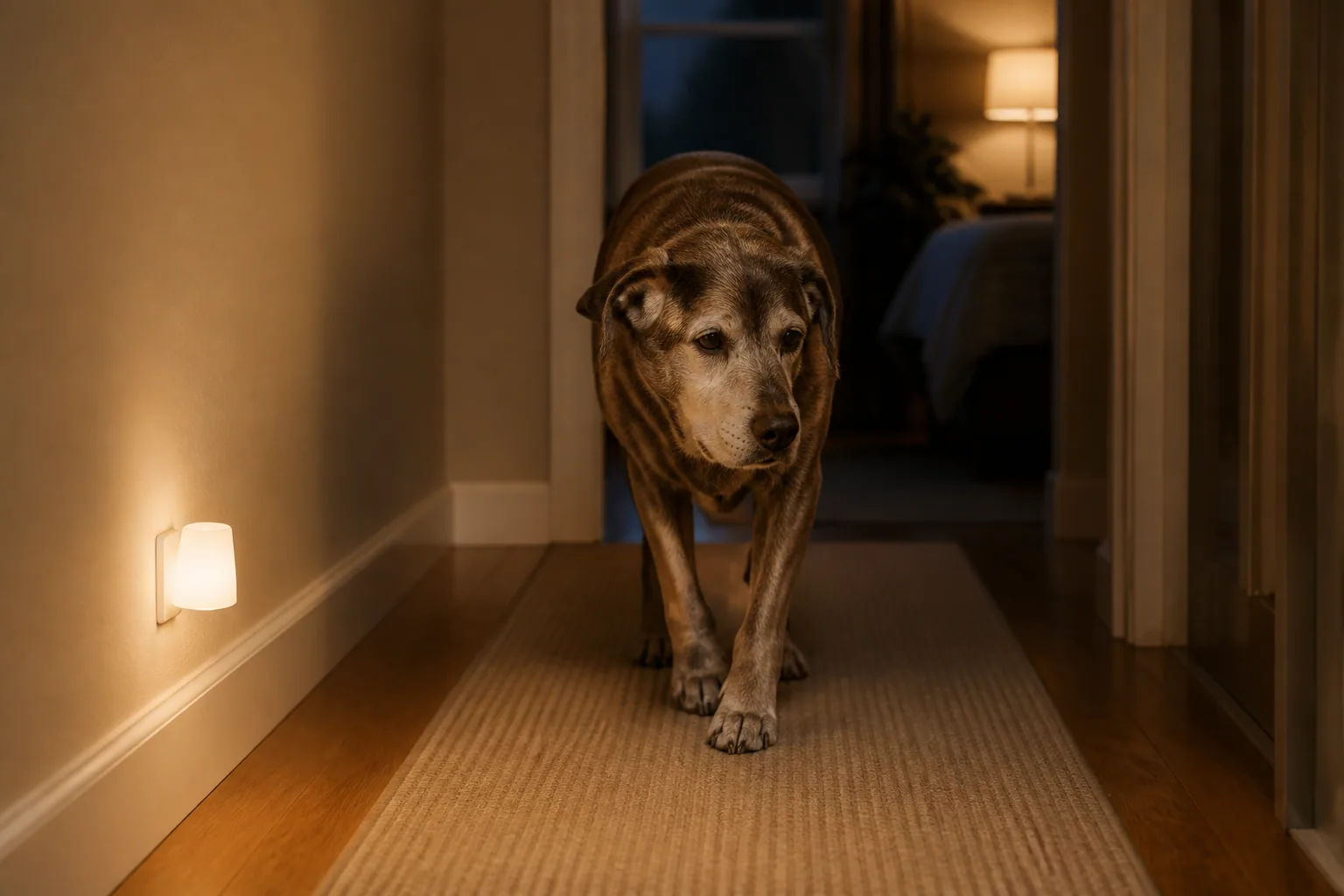
Senior dog pacing at night can be associated with cognitive change, but it can also reflect discomfort, a need to eliminate, anxiety, sensory changes, medication effects, or another health problem. Record the pattern, make the route safer, and arrange veterinary advice instead of assuming the dog simply has dementia.
Define what “pacing” looks like
Write down the path your dog follows, the time it begins, how long it lasts, and whether there is panting, vocalizing, staring, scratching at a door, asking to go out, or difficulty settling. Note whether the movement is a repeated loop, wandering between specific places, or repeated attempts to lie down and rise.
Concrete detail helps separate possible causes. “Walked from the bed to the back door six times between 1:10 and 1:25 a.m.” is more useful than “restless all night.”
Check the immediate environment
Without delaying needed care, look for simple hazards or triggers. Is the room too hot or cold? Is a device making a new sound? Can the dog reach water and the usual toilet route? Is the floor slippery? Has furniture moved?
Use low, even lighting on familiar paths. Secure rugs, remove clutter, and block stairs or narrow places where a disoriented dog could become trapped. Keep water available and use a washable, supportive resting area.
Keep nights predictable
A steady evening sequence can reduce uncertainty: a suitable outdoor break, calm interaction, prescribed medication at the correct time, and a familiar sleeping place. Avoid suddenly adding strenuous exercise or an unfamiliar supplement in response to one difficult night.
If the dog needs help, use a calm voice and guide rather than scold. Nighttime behavior is not a deliberate challenge. Punishment can increase fear and make settling harder.
Build a seven-day record
For each night, record bedtime, wake periods, pacing duration, elimination, food and water changes, daytime naps, exercise, unusual events, and all medication or supplement timing. Add notes on appetite, mobility, coughing, breathing, and signs of discomfort.
A camera can help if it records passively and does not replace direct checks. Review only enough footage to summarize the pattern; you do not need to watch every minute.
Know when to call sooner
Contact a veterinarian promptly for a sudden or marked change, collapse, breathing difficulty, repeated vomiting, inability to stand, seizure activity, severe distress, or a possible toxin exposure. New pacing paired with a swollen abdomen, unproductive retching, or obvious pain also needs urgent guidance.
For a gradual pattern, book an appointment rather than waiting for exhaustion to force the issue. Cornell notes that cognitive dysfunction is evaluated alongside other conditions that can create similar signs.
Ask for a plan with measurable goals
Bring the log, videos, current diet details, and complete medicine and supplement list. Ask what the examination is intended to rule out and whether sleep, pain, sensory function, elimination, or cognition needs further assessment.
If the care plan changes, agree on what improvement means. It might be fewer wake periods, shorter pacing episodes, easier settling, or less distress. Choose one change at a time when possible so the response can be interpreted.
Protect caregiver sleep too
Repeated night waking affects the whole household. Tell the veterinary team honestly about caregiver fatigue and safety. AAHA’s senior-care guidance recognizes caregiver burden as part of the care discussion. A sustainable plan matters for both dog and family.
Share nighttime responsibilities where possible, simplify cleanup, and keep essential supplies ready. Do not use human sleep aids or unapproved products.
Night pacing is a sign to investigate, not a diagnosis. A specific record, safer environment, and timely veterinary conversation provide a stronger starting point than a late-night product search.
Further reading & sources
Cornell University: Senior dog dementia ↗Cornell University: Cognitive dysfunction syndrome ↗AAHA: 2023 Senior Care Guidelines for Dogs and Cats ↗Edited by Waggle Hollow
Every dog is different. This is general information, not a diagnosis or treatment plan. Ask your veterinarian about individual health, diet, and supplement decisions.