House Soiling in Older Dogs: A Calm Response
House soiling in older dogs is information, not misbehavior. Track the pattern, reduce stress, and prepare for a veterinary evaluation.
House soiling in older dogs should be treated as a change to investigate, not a training failure to punish. Mobility limits, urinary or digestive problems, sensory changes, altered routines, and cognitive dysfunction can all affect previously reliable habits. Clean up calmly, make outdoor access easier, and arrange veterinary advice.
Describe the pattern precisely
Record whether the accident involved urine, stool, or both; where it happened; the time; and whether the dog had recently been outside. Note signals such as pacing, circling, staring at a door, straining, increased thirst, loose stool, or difficulty standing.
Include frequency and urgency. One accident during a disrupted day is different from repeated overnight episodes or a sudden inability to wait.
Do not punish uncertainty
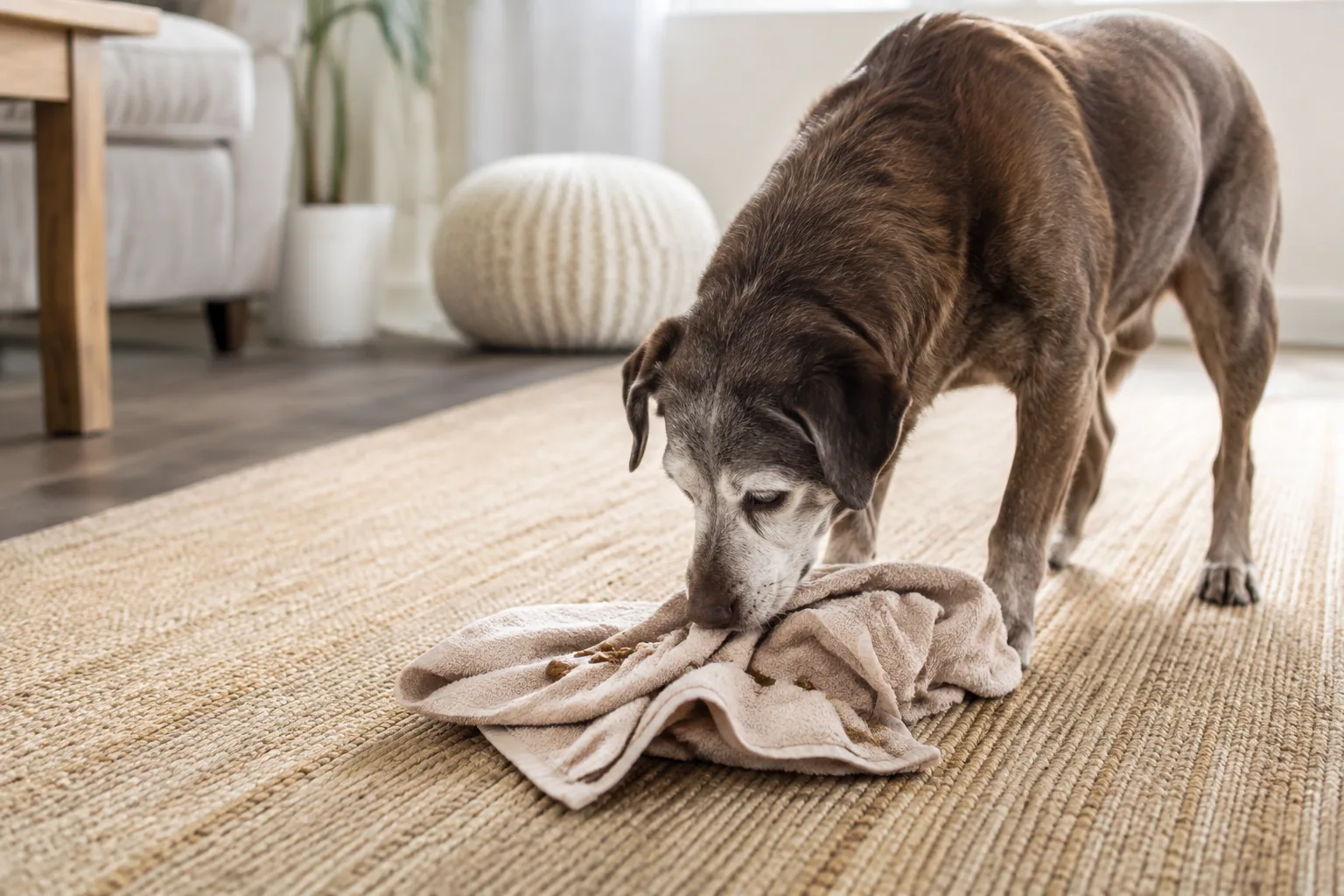
An older dog is not choosing a health or navigation problem. Scolding after the event cannot explain what happened and may increase fear. Move the dog to a comfortable place, clean with a suitable pet-safe product, and add the event to the log.
If other animals or children are present, give the senior dog space. Stress around elimination can make the household harder to navigate.
Make success easier
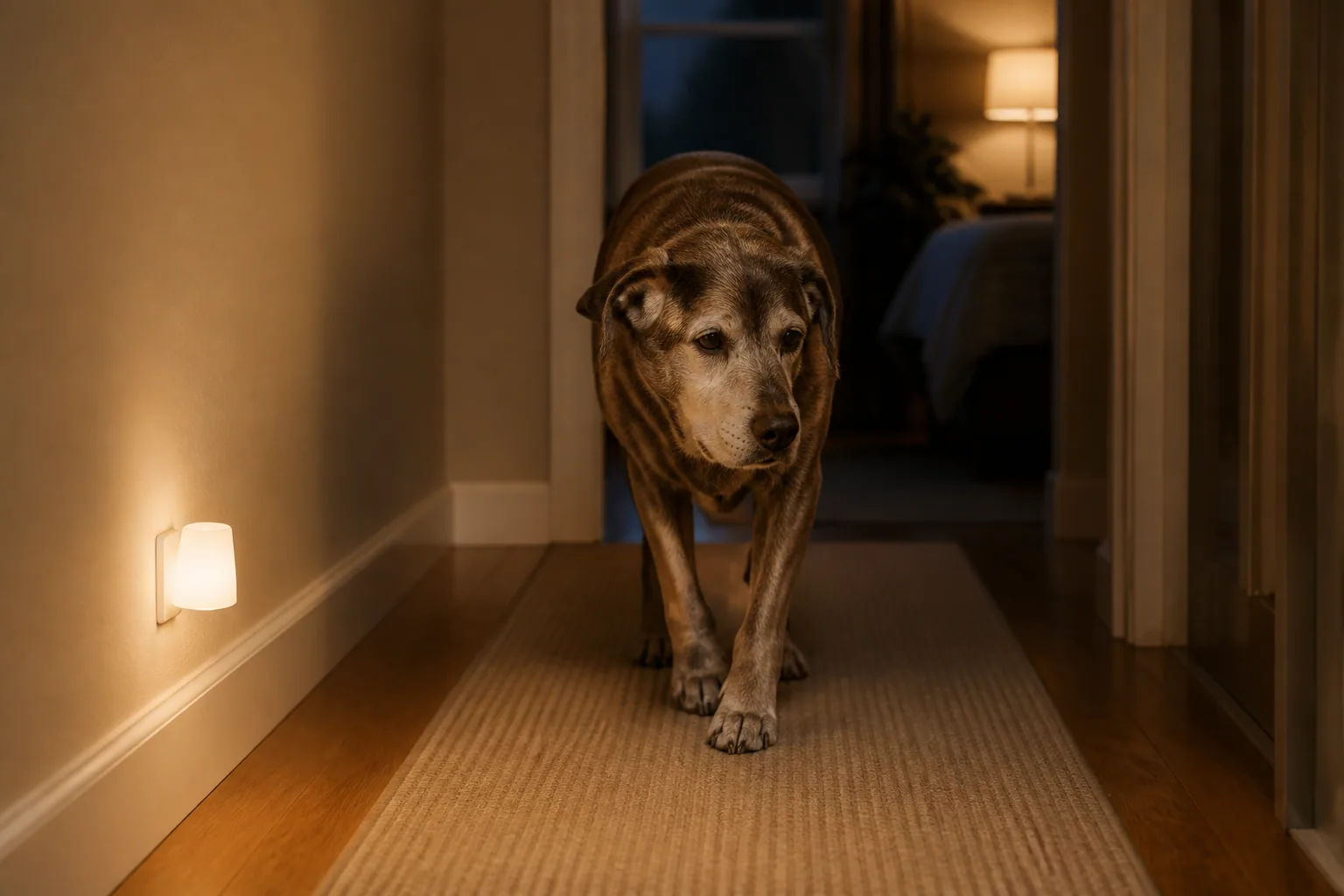
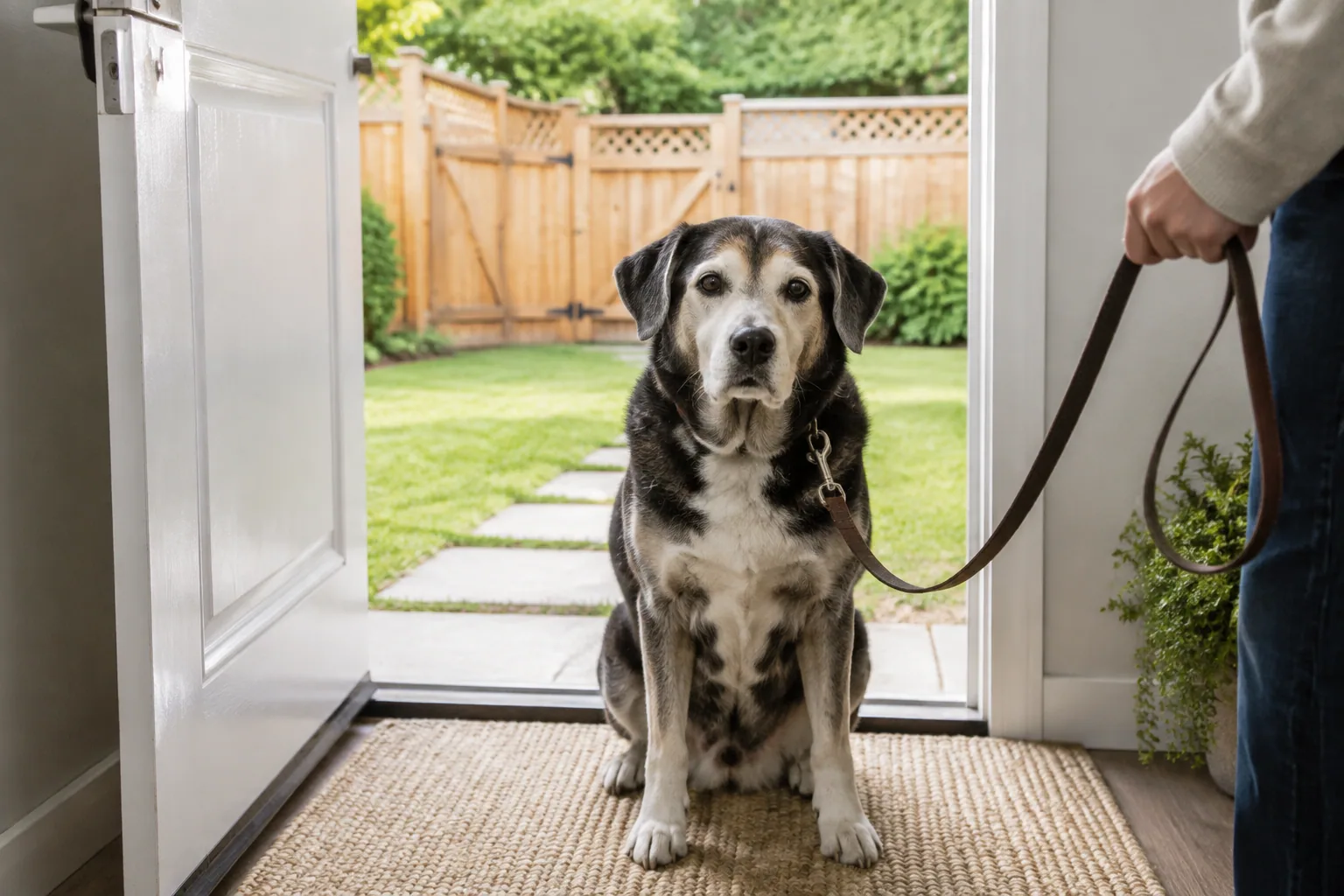
Offer more frequent, predictable outdoor opportunities that match the dog’s abilities. Keep the path clear, well lit, and nonslip. Use the same accessible exit where possible. Stay nearby if hearing, vision, mobility, or orientation has changed, while allowing enough time to eliminate.
For apartments or stairs, discuss safe practical options with the veterinary team. Avoid improvising equipment that the dog cannot use securely.
Track the rest of the dog
Cornell and AVMA include house-training loss among possible cognitive changes, but a veterinarian needs the broader picture. Record drinking, appetite, stool, urine amount, sleep, mobility, medication, and behavior. Mention any diet or supplement change.
Take photographs of food and medication labels. If you can safely collect a sample when the clinic requests one, follow their instructions rather than guessing how to store it.
Call promptly for concerning signs
Contact a veterinarian promptly for straining without producing urine, blood, repeated vomiting or diarrhea, severe weakness, collapse, marked pain, or a sudden major behavior change. Frequent urination, greatly increased drinking, or repeated accidents also warrant timely advice.
Do not restrict water to prevent cleanup unless a veterinarian has specifically instructed it. That can create additional risk and hide useful information.
Prepare useful appointment questions
Bring a short timeline and ask:
- Which medical and mobility causes should be considered?
- Could a current medicine or supplement contribute?
- Does the pattern suggest testing now?
- How often should outdoor breaks be offered?
- Which environmental changes are safe for this dog?
- What should trigger an urgent recheck?
If cognitive dysfunction remains a possibility, ask how the clinic wants you to track orientation, interaction, sleep, activity, and anxiety alongside house training.
Protect dignity and routine
Use washable bedding and easy-to-clean pathways without isolating the dog from family life. Keep familiar resting places available. If protective products are considered, ask how to fit and change them safely and how to protect the skin.
Accidents can be tiring for caregivers, especially overnight. Share the work where possible and tell the veterinary team when the routine is becoming unsustainable.
The useful response is observation, easier access, and medical assessment. That approach protects the dog’s comfort and gives the family a clearer path forward.
Further reading & sources
Cornell University: Cognitive dysfunction syndrome ↗Cornell University: Senior dog dementia ↗AVMA: Senior pets need more attention ↗Edited by Waggle Hollow
Every dog is different. This is general information, not a diagnosis or treatment plan. Ask your veterinarian about individual health, diet, and supplement decisions.