Enrichment for Senior Dogs With Cognitive Changes
Choose familiar, low-pressure enrichment for senior dogs, with short sessions, secure footing, and comfort guiding every activity.
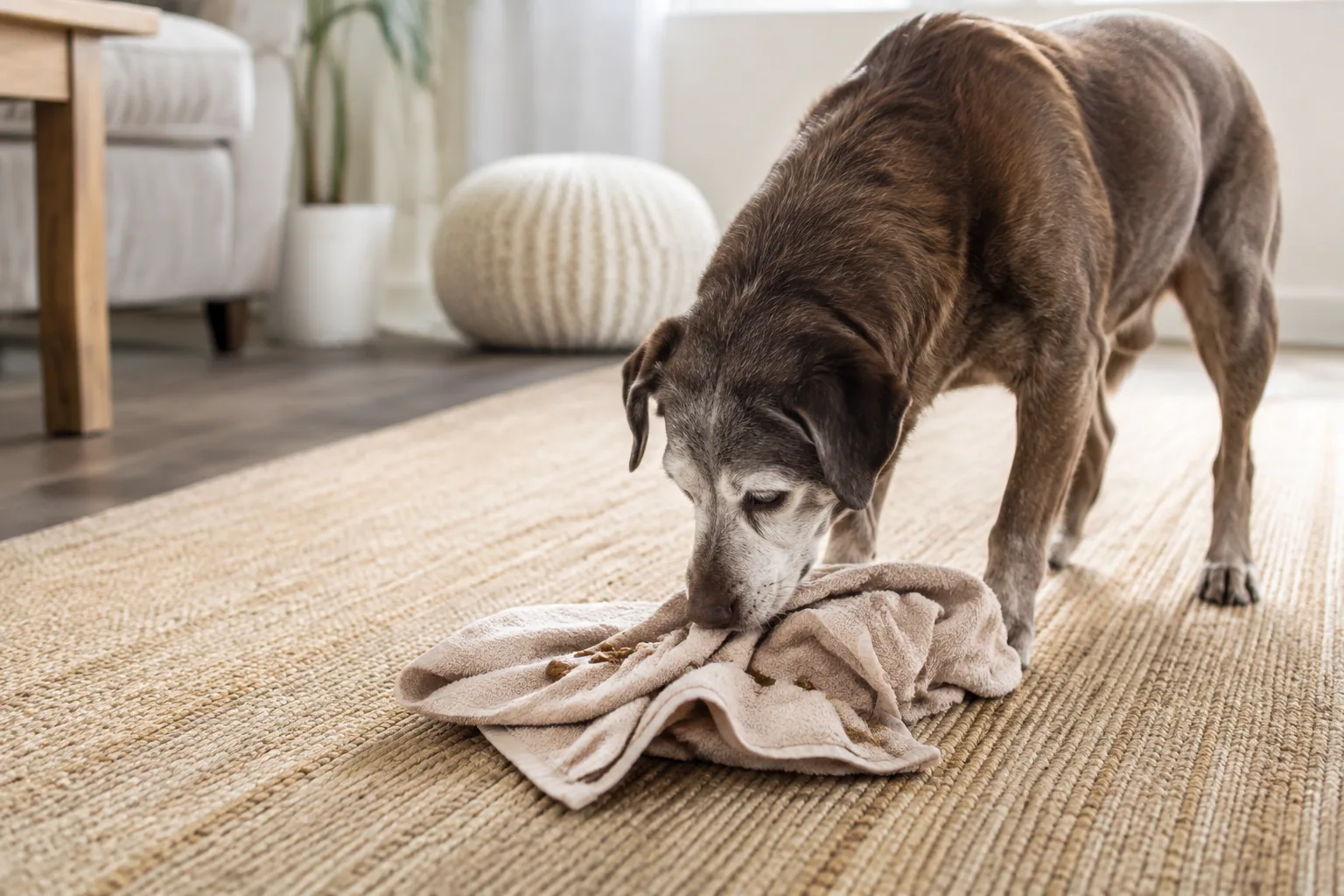
Enrichment for senior dogs with cognitive changes should be familiar, achievable, and easy to stop. Short sniffing opportunities, calm social contact, simple food searches, and gentle choice can support engagement. Match every activity to mobility, vision, hearing, diet, and the veterinary care plan.
Start below the dog’s current limit
Choose an activity the dog already understands and make it easier. Place a favorite toy in plain view, scatter a few pieces of the dog’s measured food on a clear rug, or pause on a familiar walk for extra sniffing. Success matters more than novelty.
Cornell includes enrichment as one part of managing cognitive dysfunction. That does not mean more stimulation is always better. Frustration, fatigue, slipping, and digestive upset can turn a well-meant game into a poor experience.
Use the dog’s senses thoughtfully
For a dog with reduced vision, rely on familiar scent and texture while keeping the floor clear. For hearing loss, use gentle visual or touch cues the dog already knows. Avoid startling the dog from sleep or approaching from a blind side.
Scent games should use safe, familiar food within the daily allowance. Do not hide food near chemicals, cords, stairs, or objects that could be swallowed.
Keep sessions short and observable
Begin with a few minutes. Watch posture, breathing, movement, focus, and willingness to continue. Stop if the dog freezes, turns away repeatedly, becomes frantic, slips, pants unusually, or cannot settle afterward.
Record which activity was offered, duration, and response. Over time, the log reveals whether an activity consistently supports calm engagement or has become too difficult.
Offer choice instead of pressure
Present one simple option and let the dog approach. Avoid holding the dog at a puzzle, repeatedly cueing a behavior, or making food unnecessarily hard to reach. If help is needed, simplify immediately.
Familiar companionship can be enrichment. Sitting together outdoors, gentle grooming the dog already enjoys, or visiting a quiet familiar room may be more suitable than a new toy.
Adapt movement carefully
Use secure footing and clear space. Keep turns wide and avoid jumping or sudden direction changes. Ask the veterinary team about activity limits when the dog has pain, weakness, heart or breathing concerns, recent surgery, or another condition.
Do not use exhaustion as a sleep strategy. Activity and rest should be balanced across the day.
Fit food activities into the nutrition plan
Count food used in games as part of daily intake. Use the dog’s usual food when practical and avoid introducing rich treats to increase interest. If appetite has changed, discuss it rather than hiding the pattern with constant novelty.
Clean food toys thoroughly and inspect them for cracks or loose pieces. Supervise the entire session.
Build a gentle weekly rotation
A simple rotation may include a familiar sniff walk, an easy search, calm training with one known cue, time in a safe outdoor spot, and quiet social contact. Repeat successful activities. Cognitive support does not require a stream of new purchases.
Review the plan when the dog’s sleep, mobility, appetite, or behavior changes. Sudden confusion, collapse, severe distress, or new neurologic signs need prompt veterinary guidance.
The best enrichment is the activity the dog can understand, choose, and finish comfortably today.
Further reading & sources
Cornell University: Cognitive dysfunction syndrome ↗AVMA: Senior pets need more attention ↗AAHA: 2023 Senior Care Guidelines for Dogs and Cats ↗Edited by Waggle Hollow
Every dog is different. This is general information, not a diagnosis or treatment plan. Ask your veterinarian about individual health, diet, and supplement decisions.