How to Stop Destructive Dog Chewing Without Punishment
Chewing is normal for dogs, but household damage can be reduced with a simple routine: find the pattern, remove tempting items, offer suitable alternatives, supervise choices and teach a calm trade.
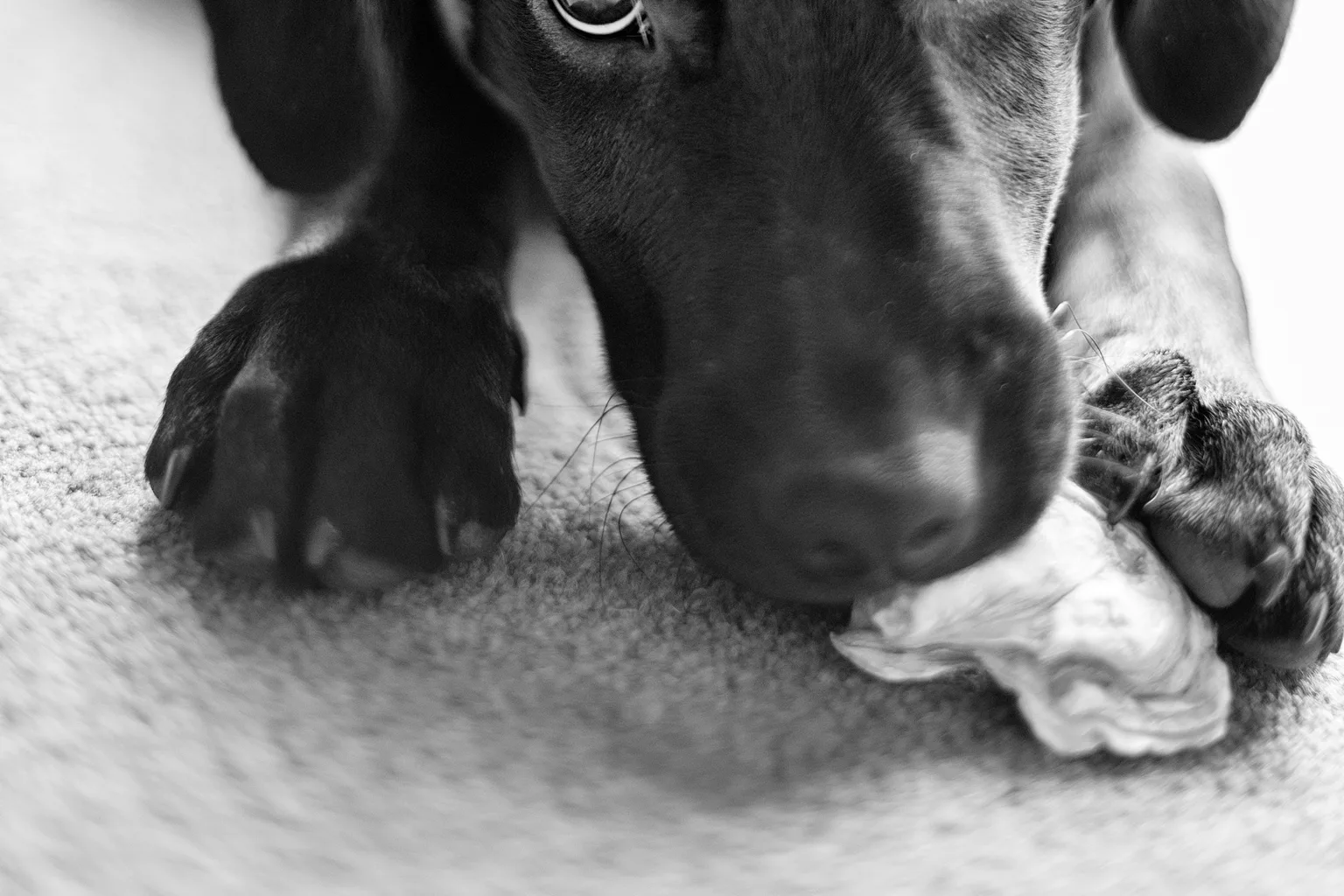
Photo by Mark Fairhurst under the Unsplash License.
Chewing is normal for puppies and adult dogs. The goal is not to stop chewing altogether, but to make appropriate choices easier and unsafe household items harder to reach. A steady routine can protect your home while giving your dog a clear alternative.
Start by finding the pattern
For several days, note what your dog chews, where it happens and what is occurring just beforehand. Pay particular attention to whether chewing happens during ordinary activity, around departures or mainly when your dog is alone.
Chewing that occurs mostly when your dog is alone, especially alongside other signs of distress, may point to separation anxiety rather than simple boredom. That pattern deserves a different response from chewing that happens when a dog finds an accessible shoe or table leg. If departures reliably trigger chewing and distress, contact a veterinarian or qualified behavior professional for guidance.
Make the wrong choice difficult
Dog-proof the areas your dog can access. Put tempting household items out of reach, including shoes and other objects your dog has already targeted. Management is not a failure to train; it prevents your dog from rehearsing the unwanted habit while you teach a better one.
Keep unsuitable items away even when you are only briefly distracted. If your dog is not yet reliable, use supervision and limit access to areas where chewing has occurred. A crate should remain a safe, short-term space rather than a punishment.
Offer alternatives that fit your dog
Provide clearly different dog-safe chew options, and choose each toy for your individual dog's size. No toy is guaranteed safe for every dog, so watch your dog while it plays. Discard toys that break apart or become torn. Small toys, strings, squeakers and tennis balls that have been chewed through can create ingestion or choking hazards.
Rotating toys can help keep the available choices varied. For a teething puppy, a supervised frozen rubber toy may provide an appropriate option. Continue watching the puppy rather than leaving the toy unattended simply because it is intended for dogs.
Supervise, redirect and trade
When you catch your dog starting on an unsuitable object, calmly redirect the dog to an appropriate toy. Avoid turning the moment into a struggle. If your dog has already picked up something unsuitable, trade it for an appropriate toy or a treat instead of forcibly grabbing the object. Once your dog releases the item, offer the replacement and keep the interaction calm.
Repeat this sequence consistently: remove access to the tempting item, present a suitable alternative and supervise the choice. Over time, your dog gets repeated practice with the behavior you want. Continue management until appropriate chewing is reliable, particularly around valuable or dangerous household objects.
Skip the after-the-fact punishment
Finding a damaged item later can be frustrating, but punishment after the event does not teach the intended behavior. Your dog cannot use a delayed correction to learn which choice would have been better. Put that energy into preventing access, supervising current behavior and offering a trade when you can respond in the moment.
If the chewing involves distress during absences, or if you cannot keep your dog safe around the objects being targeted, seek professional guidance. Otherwise, a combination of dog-proofing, suitable size-appropriate toys, supervision and calm redirection gives normal chewing a safer outlet.
Further reading & sources
ASPCA: Destructive Chewing ↗Humane World for Animals: How to stop your dog's chewing ↗Humane World for Animals: How to pick safe dog toys ↗Every dog is different. This is general information, not a diagnosis or treatment plan. Ask your veterinarian about individual health, diet, and supplement decisions.