Dog Training: Reward-Based Foundations That Last
Build dog-training foundations with clear cues, timely rewards, thoughtful management, short sessions, and qualified help when behavior becomes unsafe.
Dog training works best when the learner can understand the task, earn something valuable, and practice without fear. AVSAB recommends reward-based methods for training and behavior modification. Begin with management and a few useful skills, then increase difficulty gradually while protecting the dog's welfare.
Decide what success looks like
Replace labels such as stubborn or naughty with observable behavior. “Four paws remain on the floor while a visitor enters” is teachable. “Be good” is not. Describe when, where, and for how long the behavior should happen.
Choose a reward the dog values in that moment: food, play, access to sniffing, distance from pressure, or social contact. Motivation can change with location and stress.
Prevent the unwanted rehearsal
Training is easier when the environment supports it. Use gates before visitors arrive, cover a window that triggers repeated barking, place food out of reach, and select a quiet route while building leash skills. Management protects everyone and stops the dog from practicing a difficult pattern.
Management is not failure. It creates the conditions in which learning can occur.
Mark and reward clearly
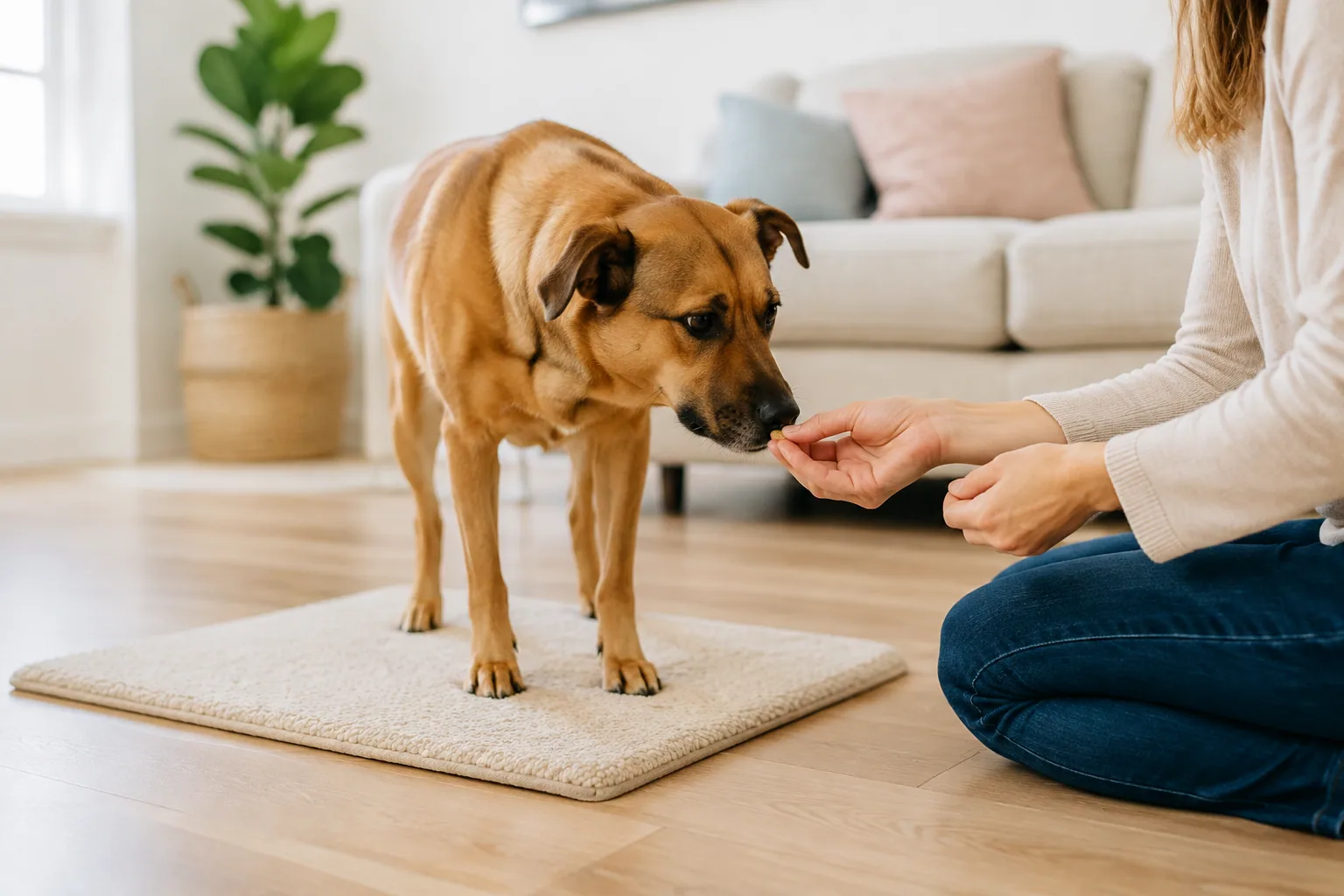
Deliver a marker word or click at the exact moment the desired behavior happens, then provide the reward. Start in a low-distraction setting. For a mat settle, reward looking at the mat, stepping toward it, standing on it, and eventually lying down.
Keep sessions short. Several one-minute practices can be more useful than one exhausting session. End when the dog is still engaged and give rest between challenges.
Add difficulty one part at a time
Duration, distance, and distraction are separate variables. If you move to a busy place, lower your expectation for duration and distance. Return to an easier step when the dog cannot respond.
Do not repeat a cue rapidly. Pause, reduce the difficulty, and make the next repetition clearer. Reward success generously enough that the behavior is worth repeating.
Avoid punishment-based shortcuts
Pain, intimidation, leash corrections, electronic collars, prong collars, choke chains, and flooding can create welfare risks and harmful associations. Suppressing growling can remove a warning without changing the dog's discomfort.
If a technique depends on the dog avoiding fear or pain, choose another plan. Ask any trainer to explain methods and equipment before handing over the leash.
Treat behavior change as possible health information
Sudden irritability, house soiling, touch sensitivity, withdrawal, sleep disruption, or loss of a learned skill may involve pain or illness. Record the change and consult the veterinary team rather than assuming it is a training problem.
Know when to get help
Seek qualified support for bites, aggression, guarding, panic, severe separation distress, self-injury, or behavior that limits essential care. Begin with a veterinarian to assess medical factors. Ask professionals about education, methods, insurance, referral relationships, and how progress will be measured.
Track small functional wins
Record what happened before the behavior, the dog's response, and recovery time. Useful progress may be taking food farther from a trigger, settling sooner, choosing distance, or completing one calm repetition.
Good dog training produces skills and trust that function in daily life. The aim is a dog who understands the cue and can succeed, supported by a caregiver who notices when the task needs to become easier.
Edited by Waggle Hollow
Every dog is different. This is general information, not a diagnosis or treatment plan. Ask your veterinarian about individual health, diet, and supplement decisions.