Dog Park Near Me: A Safety Checklist Before You Go
Before choosing a dog park near you, assess fencing, crowding, cleanliness, local rules, your dog's comfort, and safer alternatives to group play.
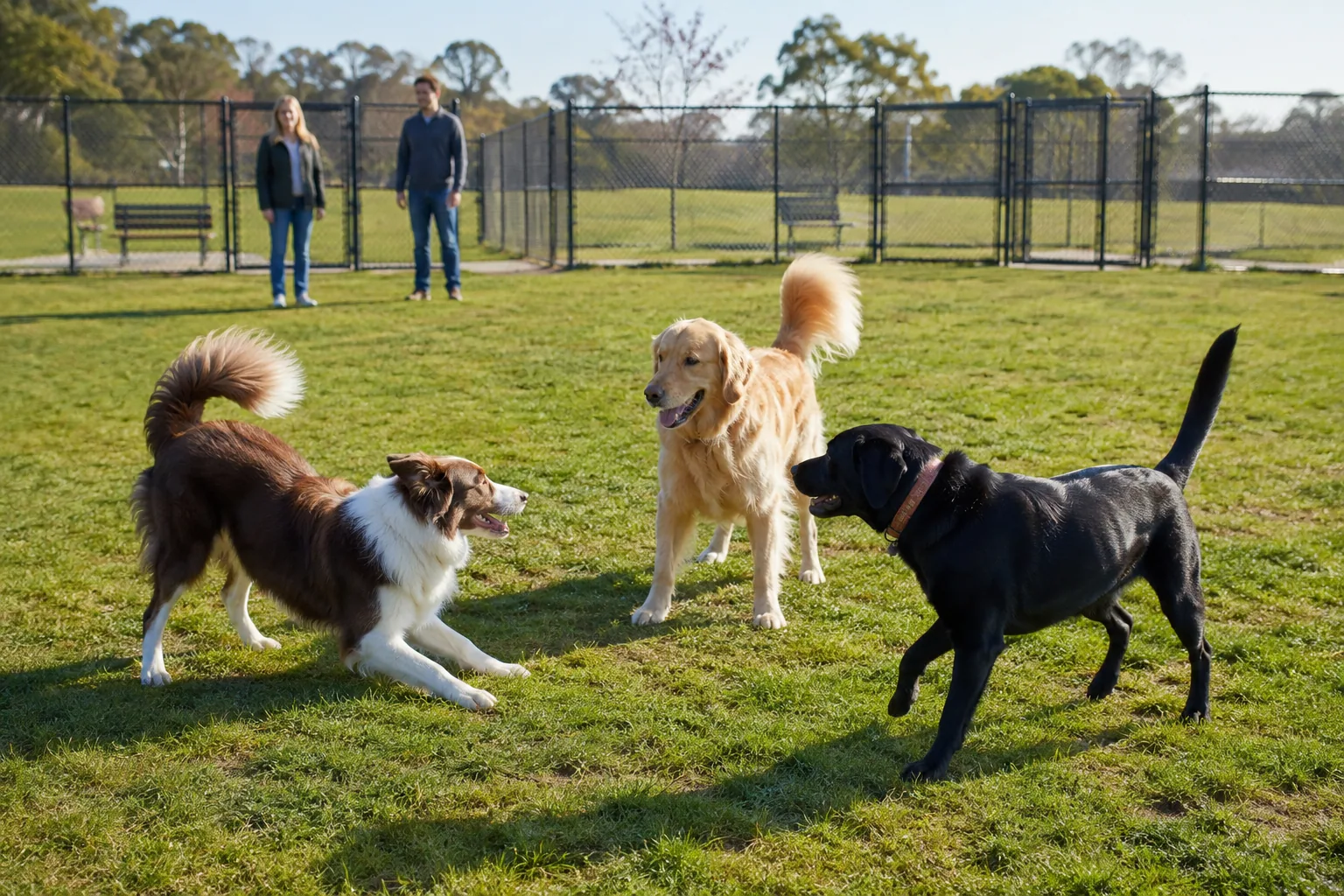
A “dog park near me” search can locate a fence on a map, but distance does not tell you whether the park suits your dog. Visit without your dog first, read the local rules, inspect the space, and watch how people manage play. A nearby park is useful only when the dog, environment, and timing are a good match.
Scout the park before entering
Check the entire boundary for gaps, damaged wire, sharp edges, standing water, trash, and gates that do not close securely. A double-gate entry gives people more control during arrivals and departures. Look for separate areas by size where offered and verify that users follow them.
Notice the surface, shade, water access, parking, and escape routes. Bring your own water and bowl instead of relying on a shared bowl. Confirm hours, licensing rules, vaccination requirements, and whether membership or registration is required.
Observe the regular crowd
Spend ten minutes watching. Are owners looking at their dogs, or at their phones? Do they interrupt relentless chasing, body slamming, cornering, or repeated mounting? Does a group crowd each newcomer at the gate? Is waste removed promptly?
Crowding changes risk. A park that feels calm early in the morning may be chaotic after work. Record the quieter times rather than assuming every visit will be the same.
Decide whether your dog wants this activity
Dog parks are optional. A dog who is ill, in pain, fearful, highly aroused, guarding resources, or uncomfortable around unfamiliar dogs should not be pushed into group play. Puppies need an age- and vaccination-appropriate plan from their veterinary team.
Basic recall can help, but it does not make an unsuitable environment safe. If your dog avoids the gate, hides behind you, repeatedly tries to leave, stops responding, or cannot settle afterward, choose another activity.
Enter and supervise actively
Wait until dogs move away from the entrance. Follow the posted leash procedure and keep your leash immediately available. Move through the park so your dog does not defend one spot or become separated from you.
Watch the whole interaction. Healthy play is usually loose, bouncy, and includes pauses or role changes. Stiff posture, fixed staring, repeated pinning, escape attempts, or one dog ignoring another dog's requests for space are reasons to interrupt and leave.
Do not bring food, high-value toys, or anything likely to create competition if rules discourage them. Clean up immediately and prevent your dog from approaching people or dogs who are trying to disengage.
Have a simple exit plan
Leave before exhaustion or conflict. Call your dog during a calm moment, move to the gate, and attach the leash in the transition area when possible. Do not reach between fighting dogs. Follow emergency guidance from park staff or local authorities and seek medical or veterinary care for injuries.
After the visit, note limping, wounds, coughing, vomiting, diarrhea, unusual fatigue, or behavior changes. Contact the veterinary team when concerned.
Choose alternatives without guilt
A sniff walk, reward-based class, private playdate with a compatible dog, fenced rental space, or supervised activity at home may provide better enrichment. The goal is not attendance at the nearest dog park. It is safe, enjoyable activity that your dog can recover from comfortably.
Further reading & sources
AKC: Should you take your dog to a dog park? ↗AVMA: Dog bite prevention ↗AVSAB: Humane dog training position statement ↗Edited by Waggle Hollow
Every dog is different. This is general information, not a diagnosis or treatment plan. Ask your veterinarian about individual health, diet, and supplement decisions.