Types of Dogs: The Seven Breed Groups Explained
Learn how common types of dogs are grouped by historic purpose, and why size, energy, care needs, and individual temperament matter more than labels.
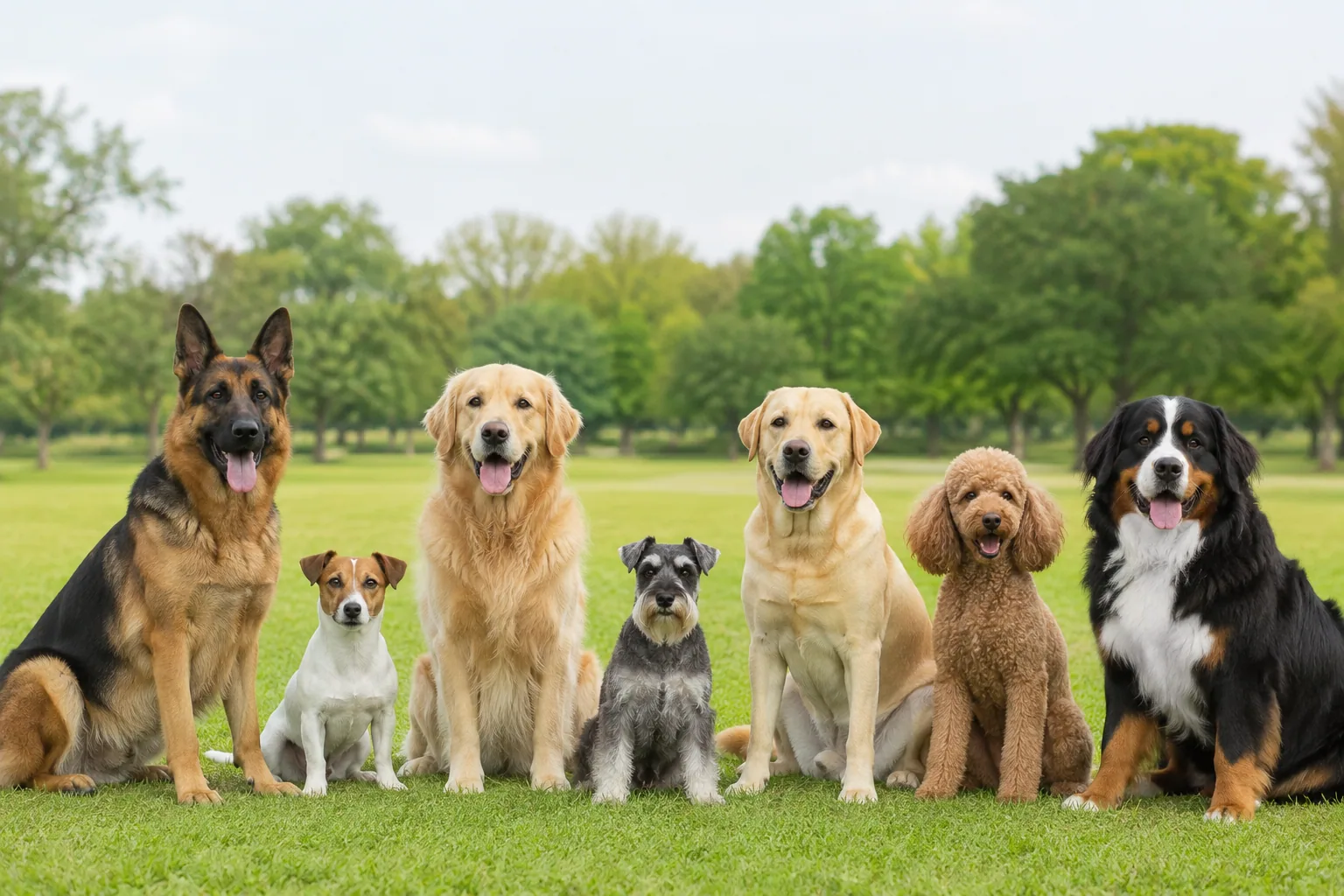
Types of dogs are often organized into breed groups that reflect the work their ancestors were developed to do. The American Kennel Club uses seven groups: sporting, hound, working, terrier, toy, non-sporting, and herding. These labels are useful starting points, but they cannot predict everything about an individual dog.
What a breed group can tell you
A group offers historical context. Sporting dogs were developed for work alongside hunters; hounds commonly followed prey by scent or sight; herding dogs controlled livestock; terriers pursued vermin; and working dogs performed jobs such as guarding, pulling, and rescue. Toy dogs were primarily bred as companions, while the non-sporting group contains breeds with varied histories.
Those origins can still influence energy, interests, communication, and the activities a dog finds rewarding. A retriever may enjoy carrying objects, while a scent hound may become absorbed in an odor trail. This is context for planning, not a guarantee.
Group is not the same as personality
Dogs within one breed can differ in confidence, sociability, activity, health, and learning history. Age and current health also change daily needs. A quiet adult from an active breed may suit one household better than a high-energy individual from a breed described as easygoing.
Meet the actual dog whenever possible. Ask a foster caregiver, breeder, shelter team, or previous owner for observations from ordinary situations rather than relying only on appearance or a group label.
Compare practical care needs
Before choosing among types of dogs, write down what your household can provide every day. Consider exercise, training time, grooming, noise tolerance, access to outdoor space, safe transport, veterinary costs, and who will provide care during work or travel.
Size affects more than floor space. Large dogs can cost more to feed and medicate and may require equipment or transport that one person can handle safely. Small dogs still need training, enrichment, preventive care, and protection from rough handling.
Coat is another practical factor. Shedding, matting, professional grooming, bathing, nail care, and seasonal weather tolerance vary. Ask for realistic maintenance rather than choosing from a photograph.
Think about function and environment
A dog developed for sustained work may need structured activity and mental engagement, but more activity is not always better. The right plan should fit the dog's age, health, and ability to settle. Secure fencing, local leash rules, neighbors, children, other pets, stairs, and climate all affect the match.
If you rent, verify size or breed restrictions before committing. If the dog will share a home with other animals, ask how introductions will be managed and what separation options exist.
Use breed information as a question list
Breed profiles can help you ask about common care patterns and health screening. They should never be used to dismiss behavior, assume a medical outcome, or promise that a dog will behave a certain way.
Ask these questions about any candidate:
- What does a normal day look like for this dog?
- How do they respond to visitors, handling, other animals, and time alone?
- What grooming and veterinary care have they received?
- Which activities help them relax afterward?
- What support is available if the placement is not working?
The best type of dog is the individual whose needs and temperament fit the life your household can reliably provide for many years.
Edited by Waggle Hollow
Every dog is different. This is general information, not a diagnosis or treatment plan. Ask your veterinarian about individual health, diet, and supplement decisions.