Canine Cognitive Dysfunction Signs to Record
Use a calm observation log to record possible canine cognitive dysfunction signs and give your veterinarian a clearer account of changes over time.
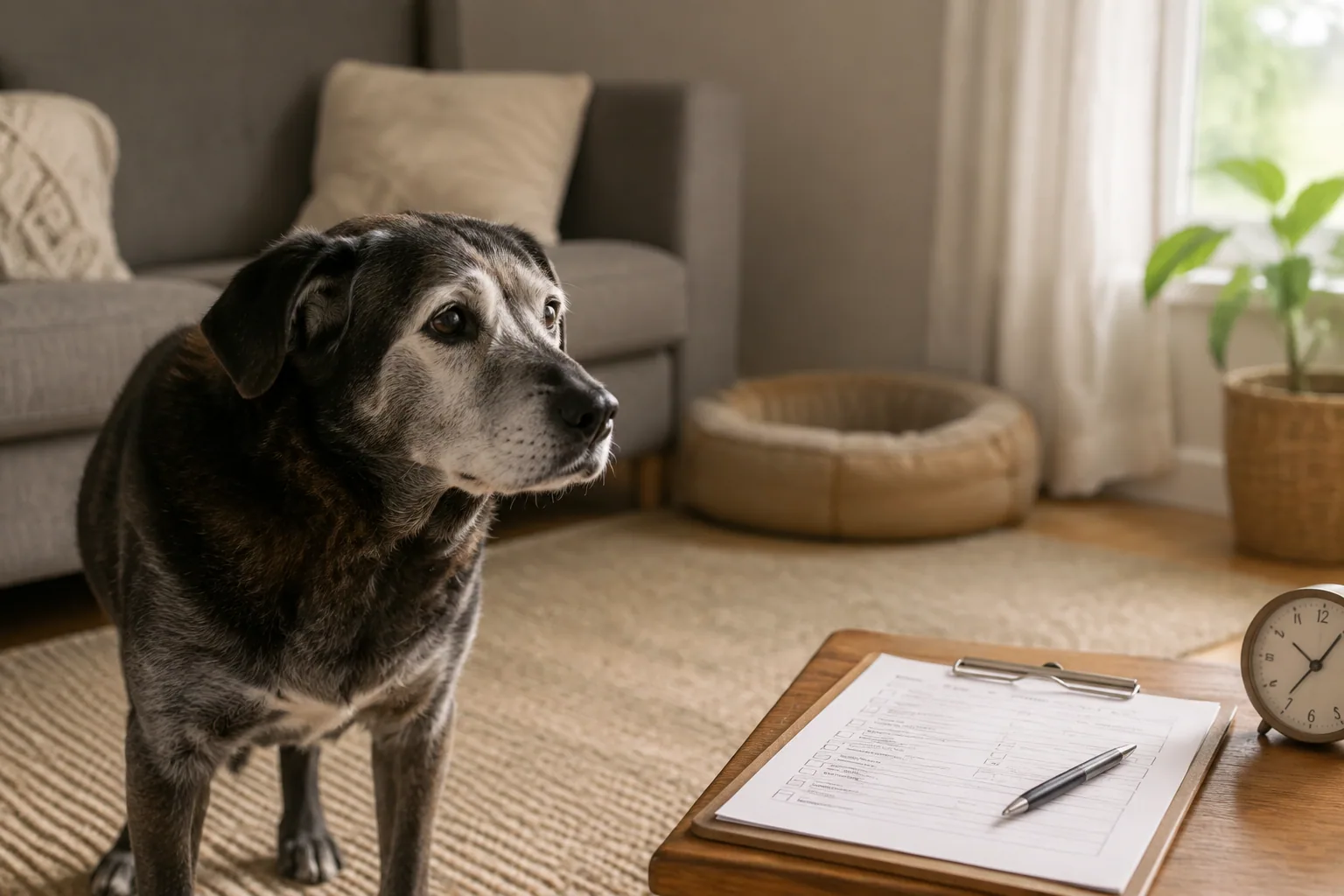
Canine cognitive dysfunction signs often appear as gradual changes in orientation, interaction, sleep, house training, activity, or anxiety. A checklist can help you notice a pattern, but it cannot diagnose the cause. Record what happens and share the timeline with a veterinarian, because pain, sensory loss, urinary problems, and other illnesses can produce similar behavior.
Use the DISHAA areas as observation prompts
Veterinary resources often organize observations with the letters DISHAA: disorientation, changes in social interaction, changes in sleep-wake cycles, house-soiling or loss of learned behavior, altered activity, and anxiety. Treat these as headings for notes rather than a home diagnosis.
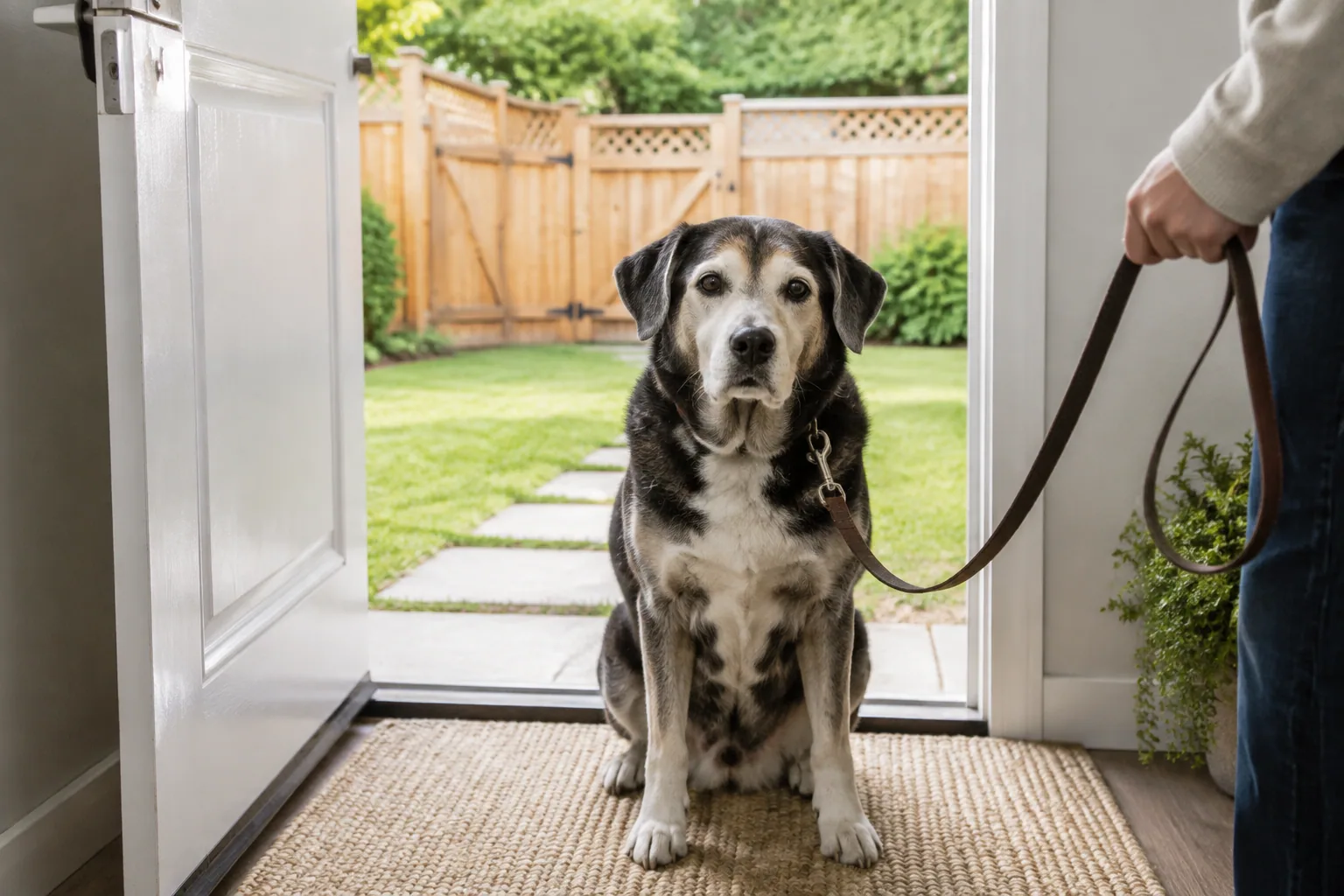
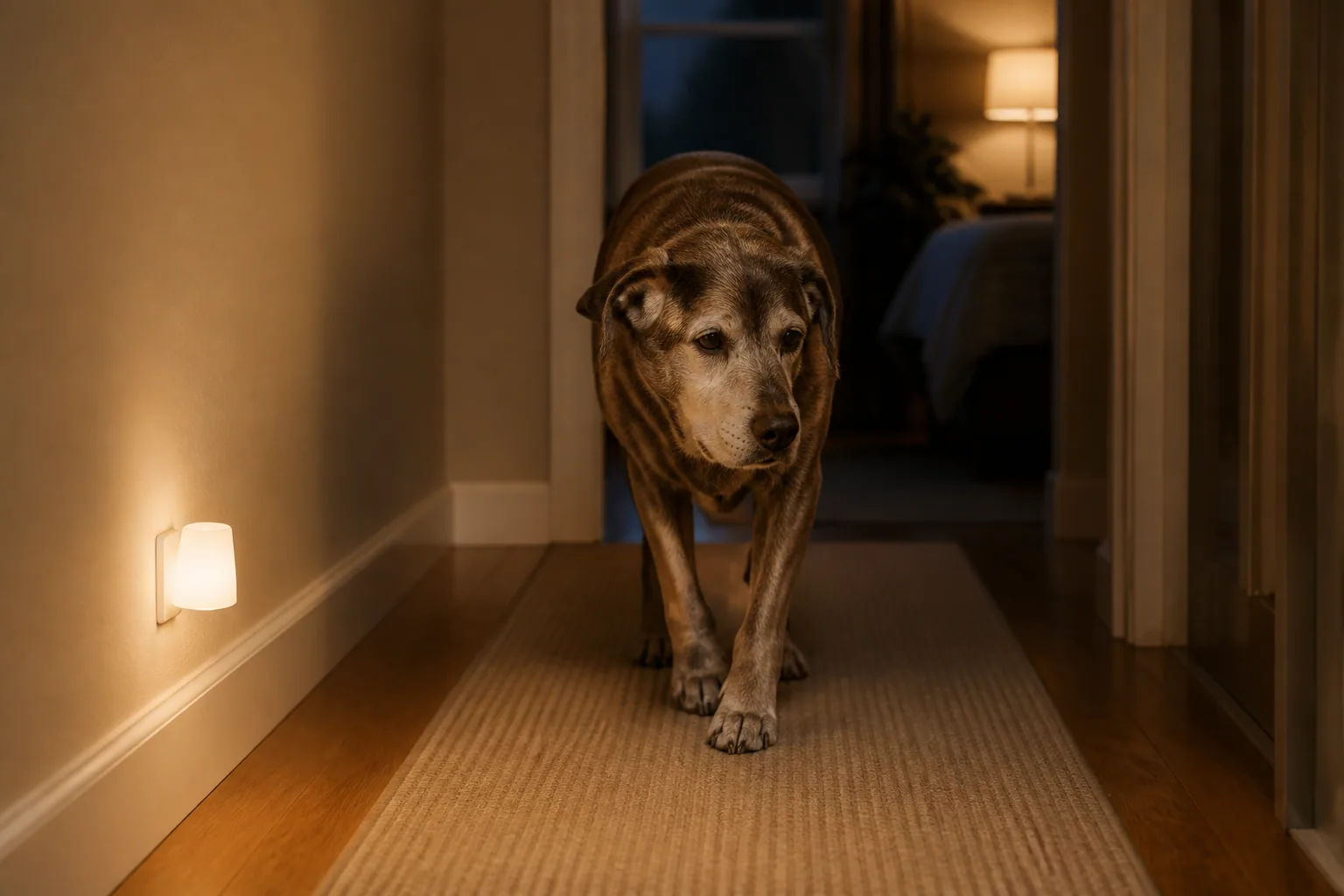
Disorientation might look like becoming stuck behind furniture, pausing at the wrong side of a door, or seeming lost in a familiar room. Interaction changes may include seeking less contact, becoming unusually clingy, or reacting differently to familiar people or animals. Sleep changes can include waking, pacing, or vocalizing at night. House-training changes deserve attention even when they happen only occasionally.
Describe behavior without interpreting it
“Confused” is understandable, but a more concrete note is easier to assess: “stood behind the open bedroom door for two minutes at 9 p.m. and did not back out until guided.” Record time, place, duration, what happened immediately before, and how the episode ended.
Video can be useful when it is safe and does not delay help. Capture the whole dog and the surroundings rather than staging a behavior. Never provoke a concerning episode for the camera.
Create a simple weekly log
Choose a method you will actually use. A paper page on the refrigerator can be as effective as an app. Include:
- date and time;
- the specific behavior;
- duration and frequency;
- food, activity, visitors, or routine changes that day;
- mobility, appetite, drinking, elimination, and sleep observations;
- any medicine or supplement changes;
- a short note on recovery and comfort.
A weekly summary prevents isolated incidents from taking over the story. It also shows whether a change is becoming more frequent or affecting several parts of daily life.
Notice sudden or urgent changes
Cognitive dysfunction usually develops gradually. A sudden loss of balance, collapse, seizure, severe weakness, inability to stand, breathing difficulty, repeated vomiting, or marked change in awareness needs prompt veterinary attention. Call your veterinarian or an emergency service for guidance rather than waiting to complete a tracking period.
New aggression or distress also deserves timely help. Protect people and animals by increasing distance and avoiding punishment. A behavior change can reflect fear, pain, sensory loss, or illness.
Bring the full context to the appointment
Take the log, videos, current food labels, and a list of medicines and supplements. Mention hearing or vision changes, stiffness, dental concerns, appetite changes, and accidents. Cornell explains that diagnosis includes looking for other conditions with similar signs, so details outside the “memory” category matter.
Ask what examinations or tests are being recommended and what each one is intended to rule out. If cognitive dysfunction remains a concern, ask how the veterinary team wants you to measure progress.
Track function and comfort together
Counting episodes is useful, but quality of life is broader. Note whether your dog still enjoys familiar people, meals, sniffing, resting places, and gentle activities. Record difficult moments without overlooking comfortable ones.
As changes progress, make the environment easier to navigate: keep furniture predictable, block unsafe stairs, provide nonslip paths, and use calm cues. These steps can support daily function while the medical plan is being developed.
Questions worth asking
- Which other conditions could explain these signs?
- Which changes should trigger an urgent call?
- How often should I update the log?
- What would meaningful improvement look like?
- When should we review quality of life and caregiver strain?
A careful record will not provide the diagnosis by itself. It gives the veterinary team better evidence and gives your family a clearer way to notice change.
Further reading & sources
Cornell University: Cognitive dysfunction syndrome ↗AAHA: 2023 Senior Care Guidelines for Dogs and Cats ↗AVMA: Senior pets need more attention ↗Edited by Waggle Hollow
Every dog is different. This is general information, not a diagnosis or treatment plan. Ask your veterinarian about individual health, diet, and supplement decisions.