When Your Dog Grabs the Leash: Shorten the Walk Before It Escalates
Leash grabbing often follows a pattern. Track when it starts, shorten the outing before that point, reward calmer choices and keep the leash from becoming a tug toy.
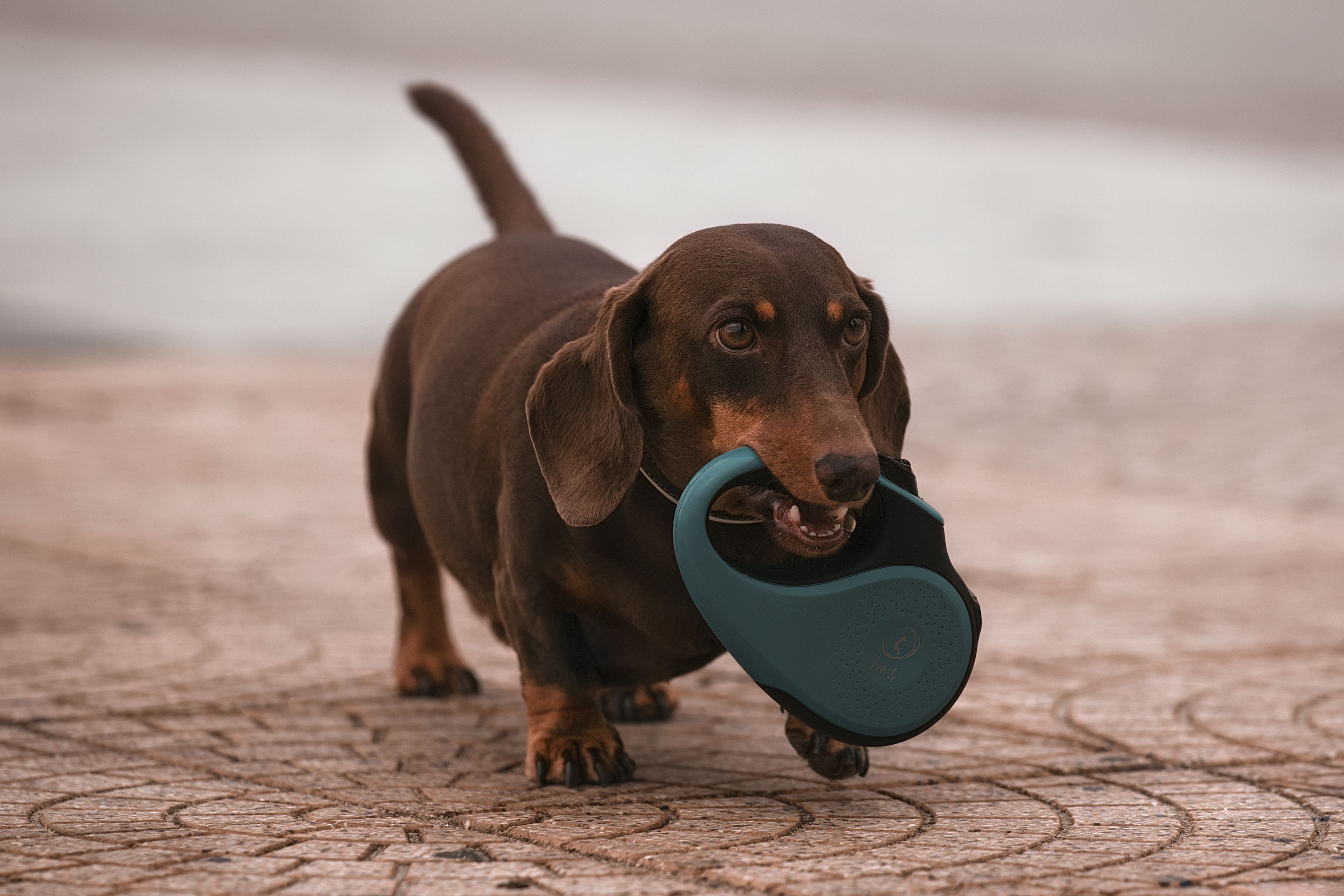
Photo by quang vinh under the Pexels License.
A dog who suddenly spins, grabs the leash and starts tugging can turn an ordinary walk into a wrestling match. The most useful first question is not "How do I win?" It is "What happened just before this?"
Leash grabbing can be playful, but it can also appear when a dog is frustrated or over-aroused. The American Kennel Club notes that tight leash pressure, an exciting environment, boredom and unclear leash skills can all contribute. Your job is to find the pattern and make the next walk easier.
Find the moment before the grab
For several walks, note when the behavior begins. Common clues include:
- the final block on the way home
- immediately after toileting
- a busy corner or narrow path
- several minutes of steady walking without a sniff break
- the leash becoming tight or swinging in front of the dog's face
Also note whether your dog can still respond to a familiar cue or eat a normal treat. If they cannot, the situation is probably already too difficult for useful practice.
Do not deliberately extend the walk to "see what happens." If the leash grabbing usually begins at 15 minutes, turn home around 10 minutes for now. A shorter successful walk gives you something to build on; a longer walk that ends in repeated biting rehearses the problem.
Change the walk before the dog changes it
Begin in a quieter place and reward the behaviors you want before the leash reaches the dog's mouth. Mark and reward a check-in, a few steps on a loose leash or a calm sniff. Keep the leash loose and positioned so it does not bounce in front of the dog like an invitation to play.
Add brief decompression moments. Let the dog sniff a safe patch, scatter a few treats in grass, or pause for an easy cue they already know. These are not payments after leash biting. They are planned breaks while the dog is still able to think.
If your dog likes carrying things, a suitable toy may provide a better mouth job. Offer it before the usual trouble point, and supervise it. The aim is not to pry the leash out and begin a different tug match. Keep the leash boring and the alternative predictable.
When the leash is already in their mouth
Stop moving and reduce the contest. Avoid yanking the leash, chasing the dog's head with your hands or shouting. Those responses can increase arousal and may make the leash feel even more like a tug toy.
If your dog can respond, use a previously practised cue such as "drop" or "this way," then calmly move to a quieter spot and end or simplify the outing. Practise that cue indoors with an appropriate toy, not for the first time during a difficult walk.
For dogs whose leash skills stall before the grabbing begins, work through our loose-leash practice reset in a low-distraction area.
Treat redirected biting as a safety issue
Leash grabbing is no longer a simple walking nuisance if the dog bites hands, arms or clothing, knocks someone down, or cannot recover after the trigger passes. Do not reach near the dog's mouth. Create distance from traffic and other people, use physical barriers when available, and seek help from a qualified reward-based behavior professional.
Talk with your veterinarian if the behavior appeared suddenly, if handling or movement seems painful, or if there are other changes in appetite, mobility or mood. Pain and medical problems need to be ruled out rather than trained through.
Progress may first look like a shorter episode, a dog who takes a break sooner, or one more calm block before turning home. Build from that earlier success instead of waiting for another battle at the end of the leash.
Further reading & sources
How to Stop Leash Tugging and Biting When Walking - American Kennel Club ↗Canine Over-Arousal - Connecticut Humane Society ↗Leash Biting - Connecticut Humane Society ↗Every dog is different. This is general information, not a diagnosis or treatment plan. Ask your veterinarian about individual health, diet, and supplement decisions.


