Diet for Dogs With Dementia: A Vet Discussion Guide
Learn what a diet for dogs with dementia can and cannot do, what to record, and which food questions belong in an individualized veterinary plan.
A diet for dogs with dementia is not a universal recipe. Veterinary sources describe nutrition as one part of a broader plan that may also include medical evaluation, environmental changes, enrichment, medication, and support for other age-related conditions. The safest goal is to prepare a clear diet history and use it to make an individualized decision with your veterinarian.
Confirm what has changed
Begin with the dog rather than the bag. Note appetite, body weight, muscle loss, stool changes, drinking, sleep, activity, and any difficulty finding or eating food. Record whether the change appeared suddenly or gradually. Sudden changes, refusal to eat, weakness, vomiting, or trouble swallowing deserve prompt professional attention rather than an online diet experiment.
Cornell notes that cognitive dysfunction can resemble other problems and is diagnosed after a broader assessment. A food change cannot substitute for that workup. Pain, dental problems, sensory loss, organ disease, and medication effects can influence both behavior and appetite.
Build a complete diet history
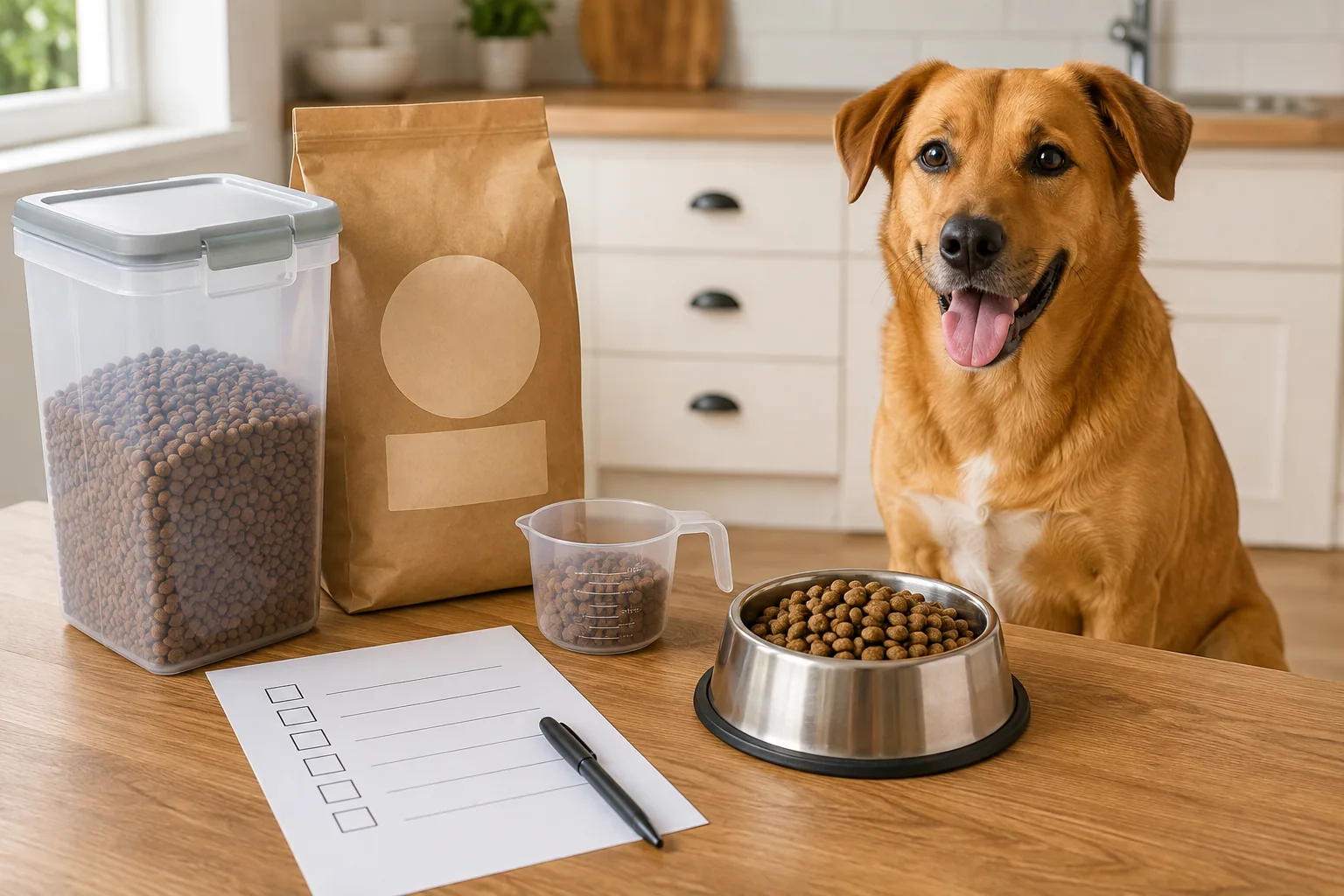
For several ordinary days, write down everything your dog consumes: the main food, measured amount, treats, table food, chews, flavored medicines, toppers, and supplements. Photograph the product labels and lot numbers. Include who feeds the dog, where meals happen, and whether food is left out or offered at set times.
WSAVA treats nutritional assessment as a routine part of veterinary care and provides diet-history and body-condition tools. The value of the history is practical: it helps the veterinary team see total intake and identify changes that a single product label hides.
Ask what the proposed food is designed to do
Some veterinary diets are formulated for specific medical or cognitive needs. Other products use “senior” as a broad life-stage message. Cornell’s senior-food guidance emphasizes that older dogs do not all need the same nutritional approach. Body condition, muscle condition, activity, concurrent disease, appetite, and current food all affect the decision.
Ask whether the goal is to maintain weight, protect lean tissue, improve palatability, manage another condition, or provide a particular nutrient profile. A clear goal makes it possible to evaluate whether a change is helping.
Look beyond the ingredient list
An ingredient list shows ingredients in descending order by weight before processing; it does not measure the quality of the finished food. More useful questions include whether the food is complete and balanced for the intended life stage, who formulated it, how the company verifies nutrient content, what quality-control steps it uses, and how to contact a qualified nutrition expert.
Do not assume a long list of added vitamins or a prominent “brain” claim proves a better diet. Ask for evidence tied to the exact formulation. If the evidence is about an ingredient alone, find out whether the studied amount and form match the product.
Change food deliberately
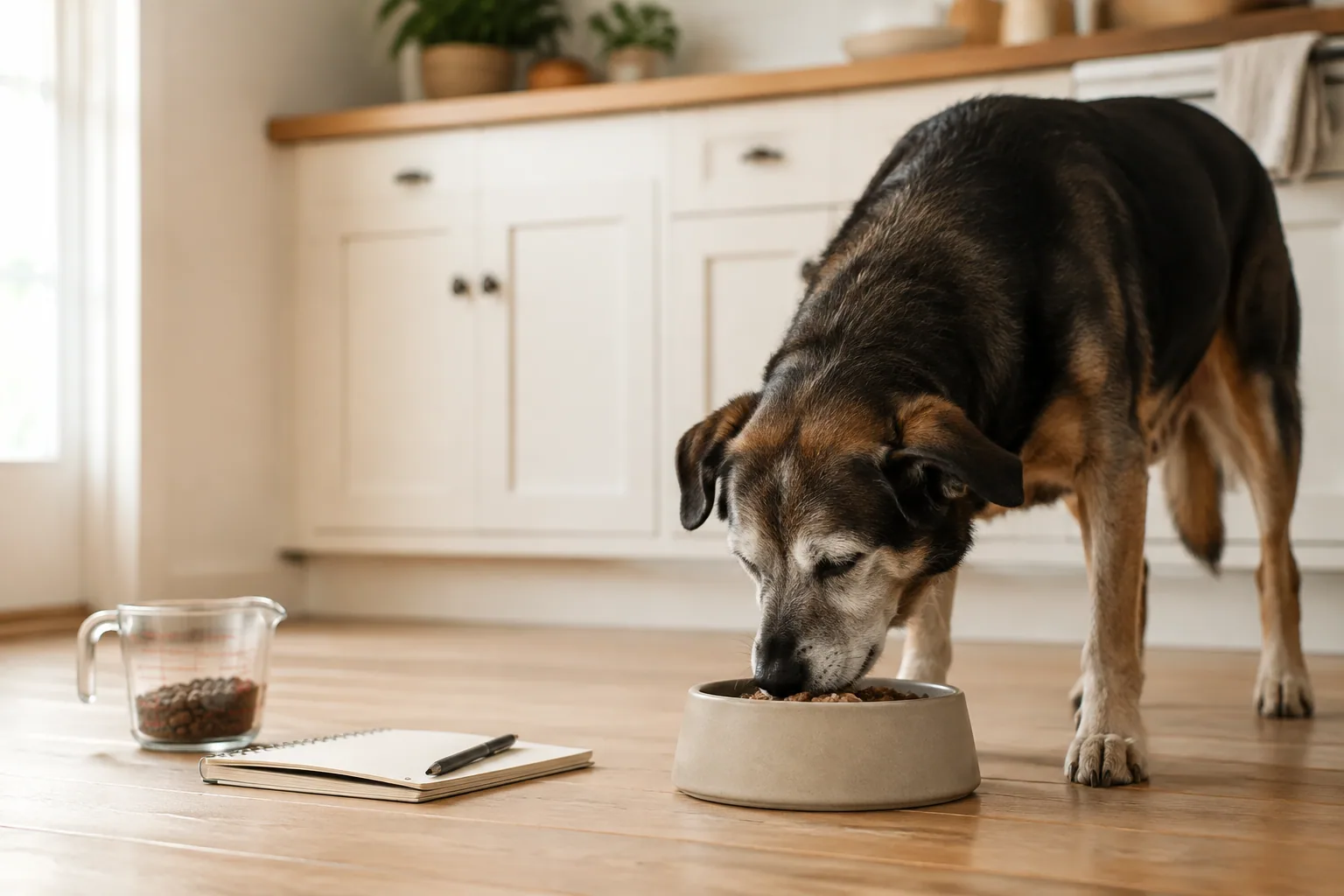
When the veterinary team recommends a change, ask how quickly to transition and what to monitor. Keep a simple log of intake, stool, appetite, body weight, sleep, pacing, interaction, and any new signs. Do not introduce a new food, several supplements, and multiple treats on the same day. One planned change at a time makes the response easier to interpret.
Food safety and storage still matter. Follow the manufacturer’s instructions, wash bowls, store food securely, and keep packaging until the product is used so the lot information remains available.
Support the eating environment
Older dogs may benefit from a quiet, predictable meal location with good lighting and secure footing. Keep the path to water and food clear. If bending, standing, chewing, or locating the bowl appears difficult, describe exactly what you see to the veterinary team rather than changing equipment or texture by guesswork.
Avoid forcing interaction around the bowl. Give the dog time and space, and supervise other pets so they do not steal food or create pressure.
Review the plan, not just the purchase
Agree on when to check weight, body and muscle condition, appetite, and behavior again. A food that sounded promising may not suit an individual dog. Conversely, a useful plan can require adjustment as health and preferences change.
Bring these questions:
- What is the nutritional goal for my dog right now?
- Does the current food already meet that goal?
- What evidence supports the proposed formulation?
- How should I transition and measure portions?
- Which changes require an earlier recheck?
- Are any treats or supplements working against the plan?
The result should be a documented feeding plan for one dog, not a generic dementia diet copied from a search result.
Further reading & sources
Cornell University: Senior dog dementia ↗Cornell University: Choosing food for your senior dog ↗WSAVA: Global Nutrition Guidelines and Toolkit ↗Edited by Waggle Hollow
Every dog is different. This is general information, not a diagnosis or treatment plan. Ask your veterinarian about individual health, diet, and supplement decisions.